Friday, 2 December 2016

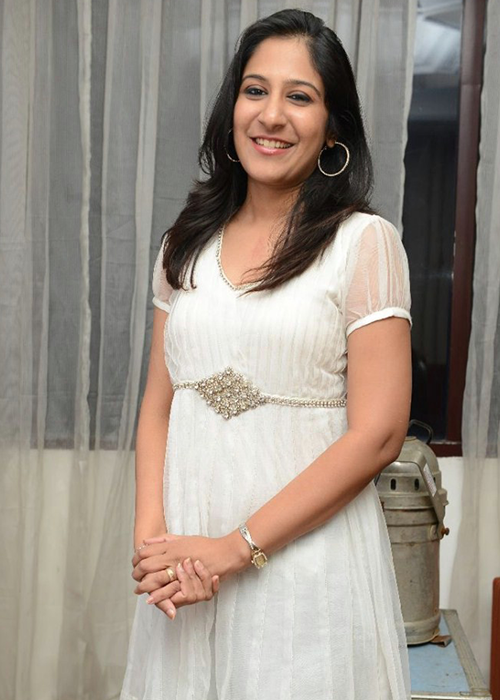
Shweta Mohan

Related image

Shweta Mohan is an award-winning Indian playback singer. She has sung in Malayalam, Tamil, Telugu, Kannada and Hindi languages. She is the daughter of Dr.Krishna Mohan & the legendary singer Sujatha Mohan.

Career


Shweta has sung for some of the most celebrated music directors in India like Ilayaraja, A. R. Rahman, Vidyasagar, M. Jayachandran, Johnson, Sharreth, Ousepachan, Deepak Dev, Harris Jayaraj, Yuvan Shankar Raja, V. Harikrishna, G. V. Prakash, Mani Sharma, Kannan, N. R. Raghunanthan, Manikanth Kadri, Devi Sri Prasad and Anirudh Ravichander. She is learning Carnatic classical music from Smt. Binni Krishnakumar and Hindustani classical music from Sri. Ghulam Niyaz Khan

Personal Life

Shweta Mohan is the daughter of Dr.Krishna Mohan & the famous Playback singer Sujatha Mohan. She is married to her long time boyfriend Ashwin Shashi on 16 January 2011.Ashwin is her all time bestie Aarathi's brother.

Jyotsna Radhakrishnan

Image result for jyotsna malayalam singer

Jyotsna Radhakrishnan (born September 5, 1986) is a playback singer in Malayalam cinema. She is based in Thrissur, Kerala.

Early life

Jyotsna was born in Kuwait. At a very young age she moved to Abu Dhabi, United Arab Emirates.
She did her schooling at the Asian International School in Ruwais, a industrial area 240 kilometres (150 miles) west of Abu Dhabi, where she excelled at singing.

Singing career

Jyotsna's interest in music started at a very young age. She learned the Carnatic vocal style under Mangad Natesan, and the Hindustani classical vocal style under Guru Dinesh Devdas.
Although she started her career in Malayalam cinema with the song "Valakilukkam Kettedee" from the film Pranayamani Thooval in 2002, it was "Sughamanee Nilavu" from Nammal that brought her to wider attention.She has sung in almost 130 movie, in Malayalam as well as in Tamil and Telugu. She has sung on some 200 albums. Some of her hits include ”Karuppinazhagu” from Swapnakoodu, "Melleyonnu" from Manassinakkare, and "Meheruba" from Perumazhakkalam.
Some of her latest films include Classmates, Pothen Vava, Don, Notebook and Janmam. She has traveled to the U.K., U.S.A., Australia and Singapore for musical programs and has performed with almost all leading playback singers of south India. She successfully concluded another North American tour with singer G. Venugopal and in August 2013 in Australia with Unni Menon performing for Malayalees in major cities. This was her first trip to Australia where she was accompanied by Ramesh Pisharody.

Personal Life

On December 26, 2010, Jyotsna married Sreekanth Surendran, a software engineer from Kochi. She gave birth to their first child, a son, on July 9, 2015.

K. S. Chithra

Image result for malayalam singer chitra

Krishnan Nair Shantakumari Chithra, often credited as K. S. Chithra or simply Chithra, is an Indian playback singerfrom Kerala. Chithra also sings Indian classical, devotional, and popular music. She has sung in a number of Indian languages as well as Urdu, Latin, Arabic, Sinhalese and English. She has recorded more than 25,000 Songs for various films and albums. She is a recipient of six National Film Awards, six Filmfare Awards South and 31 different state film awards. She has won all the four south Indian state film awards. She was honored with India's civilian honor Padma Shri  in 2005. Her song "Kannalane/Kehna Hi Kya" from the film Bombay (1995) was included in The Guardian's "1000 Songs Everyone Must Hear" list.Chithra is referred to as Chinna Kuyil (English: Little Nightingale) or Keralathinte Vanambadi (English: Nightingale of Kerala) or Nightingale of South India.

Early life

Born in Thiruvananthapuram, Kerala, into a family of musicians, Chithra's father, the late Krishnan Nair, was also her first guru (teacher). Her elder sister K. S. Beena is also a playback singer. Chithra received her training in Carnatic music from Dr. K. Omanakutty, passed B.A. in music with first class and third rank from the University of Kerala, and completed a master's degree in music. She was selected for the National Talent Search Scholarship from the Central Government from 1978 to 1984.

Career

Playback singing

Chithra was introduced to Malayalam playback by M. G. Radhakrishnan in 1979 and went on to become a regular singer for many Malayalam musicians, including Raveendran.Attahasam, Snehapoorvam Meera and Njan Ekananu were the first few films in which she recorded her songs.She also performed live concerts with K. J. Yesudas in India and abroad. She worked with music directors including Raveendran, Shyam, Jerry Amaldev, Mohan Sithara, Kannur Rajan and Johnson. She made her debut in the Tamil film industry through the song "Poojaikketha Poovithu" from the film Neethana Antha Kuyil, which was composed by Ilaiyaraaja. She was given the title Chinnakuyil after singing the song "Chinna Kuyil Paadum" from the 1985 released film Poove Poochudava.Director Fazil cast her for this song after Ilaiyaraaja got impressed with her song sung in original version in Malayalam for the film Nokkethadhoorathu Kannum Nattu in 1985 directed by himself.
By the mid-1980s, she had recorded many successful songs for composers in Malayalam, and numerous songs for Ilayaraja and others in Tamil, Telugu and Kannada. She is the female singer who has sung the maximum number of songs for the Academy Award winning composer A. R. Rahman for his Tamil film songs.She also sang for composers such as G. Devarajan, V. Dakshinamoorthy, M. B. Sreenivasan, M. S. Viswanathan, Ravi, M. G. Radhakrishnan, Johnson, Raveendran, Shyam, Rajan-Nagendra, K. V. Mahadevan, M. M. Keeravani, S. P. Venkatesh, Ouseppachan, Hamsalekha, Deva, Mohan Sithara, Vidyasagar, Bharadhwaj, Chakravarthy, M. Jayachandran, M. G. Sreekumar, Berny-Ignatius, Sharreth, Ramesh Narayan, Deepak Dev, Raj-Koti, S. A. Rajkumar, Mani Sharma, Harris Jayaraj, Devisri Prasad, Yuvan Shankar Raja, G. V. Prakash Kumar, Bijibal, Mejo Joseph, Sejo John, Shahabaz Aman, Alphons Joseph, S. Thaman, Rahul Raj, Gopi Sunder, Ratheesh Vegha, Achu Rajamani, Mickey J Meyer, M. Ghibran, Santhosh Narayanan and many other south Indian music directors.
She has recorded Hindi songs for music directors in Bollywood, including A. R. Rahman, Anand-Milind, Anu Malik, Rajesh Roshan, Viju Shah, Laxmikant-Pyarelal, R D Burman, Naushad Ali, Shankar-Ehsaan-Loy, Jatin-Lalit, Sandeep Chowta, Vishal, and Sandesh. She also recorded the Hindi versions of her own Tamil songs sung for A. R. Rahman.
She recorded maximum duets with K. J. Yesudas, S. P. Balasubrahmanyam, M. G. Sreekumar, Mano and rare duets with Kannada thespian Dr.Rajkumar, and has sung maximum songs for Ilaiyaraaja, A. R. Rahman, Ravi, M. M. Keeravani, Hamsalekha, Johnson, Raveendran, M. G. Radhakrishnan, Raj-Koti, Deva, Mani Sharma, Sharreth and M. Jayachandran.
Apart from playback singing, she also appeared among the panel of judges in the singing reality television shows at Kerala (Idea Star Singer and Josco Indian Voice), at Tamil Nadu (Airtel Super Singer Junior), where she also won the award for Best Female Judge and at Andhra Pradesh (MAA TV Super Singer

Studio albums

Chithra recorded her first studio album with Voodoo Rapper for the album called Ragga Raaga in 1993. She recorded the albums in Hindi, Piya Basanti (2000) and Sunset Point. She associated with Ustad Sultan Khan for Piya Basanti which was certified Gold. Sunset Point had eight songs written and narrated by Gulzar and sung by Chithra and Bhupinder.In 2006, she released an album in dedication to M. S. Subbulakshmi named My Tribute. It is a collection of Kritis and bhajansdedicated to Subbulakshmi.In 2009 she released Nightingale: A Salute to Lataji, a musical tribute to Lata Mangeshkar on her 80th birthday. She also recorded many Malayalam albums for K. J. Yesudas, M. Jayachandran and Sharreth compositions. She also planned a ghazal album with Ghulam Ali and Asha Bhosle.
In 2014, Chithra recorded a song at a Singapore studio for A. R. Rahman's private album Raunaq written by Kapil Sibal.
Chithra has established her own recording label, Audiotracs, to promote new artists to collaborate with her as singers, lyricists and music directors.

Personal life

She is married to Vijayashankar, an engineer and businessman and settled in Chennai. Their only daughter, Nandana, died aged eight, in a pool accident in April 2011 in Dubai.


Shreya Ghoshal

Related image


Shreya Ghoshal (born 12 March 1984) is an Indian playback singer. She has received four National Film Awards, six Filmfare Awards and nine Filmfare Awards South (one for Telugu, two for Kannada, two for Tamil and four for Malayalam) to date. She has recorded songs for film music in various Indian languages, and has established herself as a leading playback singer of Indian cinema.
Ghoshal aspired to become a playback singer from a young age. At the age of four, she started learning music. At the age of six, she started with her formal training in classical music. At the age of sixteen, she was noticed by film-maker Sanjay Leela Bhansali when she entered and won the television singing reality show Sa Re Ga Ma Pa. Following that, she made her Bollywood playback singing debut with Bhansali's romantic drama Devdas (2002) for which she received a National Film Award, a Filmfare Award for Best Female Playback Singer and Filmfare RD Burman Award for New Music Talent.
Apart from playback singing, Ghoshal has appeared as a judge on several television reality shows. She has been honored by the U.S. state of Ohio, where governor Ted Strickland declared 26 June 2010 "Shreya Ghoshal Day". She was awarded with the highest honour in London by the selected members of House of Commons of the United Kingdom. She has also featured four times in Forbes, list of the top 100 celebrities of India.

Early life

Ghoshal was born on 12 March 1984 to a Bengali Hindu family in Murshidabad, Murshidabad district, West Bengal. She grew up in Rawatbhata, a small town near Kota in Rajasthan. Her father, Bishwajit Ghoshal is an electrical engineer and works for the Nuclear Power Corporation of India, and her mother, Sarmistha Ghoshal, is a literature post-graduate. She has a younger brother, Soumyadeep Ghoshal. At the age of four, she started learning music.
Ghoshal completed her schooling up to eighth grade at the Atomic Energy Central School in Rawatbhata. In 1995, she won the All India Light Vocal Music Competition, New Delhi, organised by Sangam Kala Group, in Light Vocal group in sub-junior level. In 1997, when her father was transferred to the Bhabha Atomic Research Centre, she was relocated to Mumbai, with her family and studied at the Atomic Energy Central School in Anushakti Nagar. She joined the Atomic Energy Junior College to study science. She withdrew from the junior college and enrolled at the SIES College of Arts, Science, and Commerce in Mumbai, where she took up arts with English as her major.
Her mother used to help her in her rehearsals and she accompanied her on the harmonium and started practicing mostly Bengali songs. At the age of six, Ghoshal started with her formal training in classical music. She acquired training from Padmashree Late Kalyanji Bhai and Late Mukta Bhideji. Her first stage performance was made at a club's annual function. When she turned six, she started her lessons in Hindustani classical music. In 2000, at the age of sixteen, she participated and won the television music reality show Sa Re Ga Ma (now Sa Re Ga Ma Pa) on the channel Zee TV.

Music career

Her first studio album was Bendhechhi Beena, which was released on 1 January 1998, with 14 tracks. Some of her earlier albums include O Tota Pakhi Re, Ekti Katha (1999), and Mukhor Porag (2000).Ghoshal recorded Bengali studio album Rupasi Raate (2002). Ghoshal recorded devotional songs in albums like Banomali Re (2002), and later, Krishna Bina Ache Ke (2007).

Bollywood debut (2002–04)

Ghoshal caught the attention of director Sanjay Leela Bhansali when she participated in the 75th children's special episode of Sa Re Ga Ma. Bhansali's mother was watching the show and during Ghoshal's performance, she called him to watch her performance, after which he decided to give her a chance in his next film.According to Bhansali, Ghoshal's voice had the innocence needed for the character of Paro in Devdas (2002).
In 2000, Bhansali and music director Ismail Darbar offered her the opportunity to be the voice of Paro, the lead female character of Devdas, who was portrayed by Aishwarya Rai. Ghoshal sang five songs in the film, namely, "Silsila Ye Chaahat Ka", "Bairi Piya", "Chalak Chalak", "Morey Piya", and "Dola Re Dola", with established singers such as Kavita Krishnamurthy, Udit Narayan, Vinod Rathod, KK, and Jaspinder Narula. She was sixteen when she recorded the first song for the film, "Bairi Piya" with Udit Narayan. Her Higher Secondary Examinations were nearing that time and she would take her books and notebooks to the studio in order to study during downtime. "Bairi Piya" was an instant success and topped the charts. The film garnered her first Filmfare Award for Best Female Playback Singer for "Dola Re" (shared with Kavita Krishnamurthy)and a National Film Award for Best Female Playback Singer for "Bairi Piya".Her performance also won her the Filmfare RD Burman Award for New Music Talent.
She was an immediate success and was called by various regional film industries for recording songs in her voice. Ghoshal was next heard in Darbar-composed Desh Devi, where she performed three tracks for the film.
After rendering traditional semi-classical songs for her previous ventures, Ghoshal performed two seductive numbers for M. M. Kreem's Jism, which prevented her from being stereotyped.According to Ghoshal, "Jaadu Hai Nasha Hai" and "Chalo Tumko Lekar Chale" from the film "made everyone look at [her] in a new light", opening the doors to a "versatile image".She was awarded with another Filmfare trophy for Best Female Playback Singer for the song "Jaadu Hai Nasha Hai".She thereupon worked with Anu Malik, where she performed the female version of "Aye Meri Zindagi", "Seena Pada" and "Aai Jo Teri Yaad", along with the bhajan-styled "Har Taraf". In spite of providing vocals for "Har Taraf", Ghoshal also made her first on-screen appearance in Saaya. Apart from Inteha, Ghoshal provided vocals for Malik in two other films, Munna Bhai M.B.B.S. and LOC Kargil, where she recorded the song "Chann Chann" for the former and "Pyaar Bhara Geet" for the latter, along with Sonu Nigam. Besides, Ghoshal made her first collaboration with Shankar–Ehsaan–Loy by performing the female version of the song "Tu Hi Bata Zindagi". Calling her sing "effortless" in the song, The Hindumentioned that she was "able to impart the required emotions" for the song.
In 2004, Ghoshal contributed to the soundtrack album of Thoda Tum Badlo Thoda Hum by performing four tracks, which were labelled with an "average" tag by Joginder Tuteja from Bollywood Hungama. However, he was "impressed" with Ghoshal's rendition from her songs in Khakee, where he affirmed that Ghoshal's voice suits Aishwarya Rai to the "core" and she "lends credibility to the entire song" in "Wada Raha".Besides, the two duets with Nigam; "Dil Dooba" and "Youn Hi Tum Mujhse", were equally favored by music critics.Further complimenting her vocals in the song "Hum Tumko Nigahon Mein" and "Soniye" from Garv, Tuteja asserted that Ghoshal's "vocals have started to suit the current breed of actresses better and better with each passing day".Apart from Dil Bechara Pyaar Ka Maara, Ghoshal worked with Nikhil–Vinay in other projects, by recording "Betab Dil Hai" from Phir Milenge, and "Woh Ho Tum" from Muskaan.
During the time, Nadeem–Shravan composed Tumsa Nahin Dekha: A Love Story was considered to be the biggest album for Ghoshal, as she sang all the numbers with an exception of one song. She performed a wide variety of songs—from a jazzy number to soft romantic tunes—in the album. According to Ghoshal, the album allowed her to "experiment with the entire range" of her "singing capabilities". Besides, Ghoshal lent her voice for Malik, where she sang "Tumhe Jo Maine Dekha" and "Gori Gori" for Main Hoon Na apart from the title track—which received the maximum praise from critics. Mid Day affirmed that Ghoshal provided "perfect accompaniment" for the track, while Rediff.com was "impressed with her rendition". The year marks her first collaboration with Rajesh Roshan and Daboo Malik by singing the melodious track for the former composed "Saansein Ghulne Lagi" from Aetbaar and performing the track "Shikdum" from Dhoom, for the latter.

Personal life and popularity

On 5 February 2015, Ghoshal married her childhood friend Shiladitya Mukhopadhyaya in a traditional Bengali ceremony.
Ghoshal is referred by the media as 'Melody Queen'. Music director Jeet Gannguli,singers Javed Ali,Palak Muchhal, Sonu Nigam,Pakistani singers Rahat Fateh Ali Khan, Syed Asrar Shah, A cappella band Penn Masala, actress Dia Mirza,actor Chunky Pandey,and cricketer Suresh Raina,have mentioned her as one of their favorites in the industry. Singers Alka Yagnik,Asha Bhosle, Papon, Sadhana Sargam,filmmaker and music director Vishal Bharadwaj, picked Ghoshal as the best female singers from the generation. Usha Uthup named her among the "voice for the future". Director Vidhu Vinod Chopra has called her "the best singer in the industry". Veteran singers Vani Jairam and Manna Dey has praised her musical abilities.A Canadian singer Nesdi Jones and Ananya Nanda, the winner of Indian Idol Junior (Season 2) mentioned Ghoshal as their inspiration.
Ghoshal was also honored from the U.S. state of Ohio, where governor Ted Strickland declared 26 June as "Shreya Ghoshal Day".The first Shreya Ghoshal Day (on 26 June 2010) was celebrated among her fans on popular microblogging and social networking sites.In April 2013, Ghoshal was awarded with the highest honour in London by the members of House of Commons of the United Kingdom.
In 2012, Ghoshal appeared in the Forbes Celebrity 100, a list based on income and popularity of India's celebrities. She remained in the top fifty spots for four consecutive years, listed at the forty-second spot in 2012–13, the twenty-eighth spot in 2014 and the thirty-third spot in 2015.In 2013, Forbes Indiaplaced her in their "Top 5 Celeb100 Singers and Musicians" list.
Ghoshal is also known for her style and fashion sense.Ghoshal received lots of offers for acting in film industry but she rejected it.In 2013, the UK-based newspaper Eastern Eye placed her forty-third in their "50 Sexiest Asian Women" list. In 2015, it placed her seventh in their "Greatest 20 Bollywood Playback Singers" list. Ghoshal was listed third among the "Top Ten Hottest Female Bollywood Lead Singers" by MensXP.com, an Indian lifestyle website for men.
Ghoshal maintains a Facebook, Twitter, and Instagram, account. She is the sixth most liked Indian personality on Facebook and on Twitter.According to the statistics of Socialbakers, Ghoshal ranks in seventh place on Facebook and forty-fourth on Twitter in India.Ghoshal is among the top ten most searched Indian singers on Google Search.

Awards and nominations

Ghoshal has been a recipient of four National Film Awards for Best Female Playback Singing: "Bairi Piya" for Devdas (2002), "Dheere Jalna" for Paheli(2005), "Yeh Ishq Haaye" for Jab We Met (2007),and one award for both songs "Pherari Mon" for the Bengali film Antaheen (2008) and "Jeev Rangla" for the Marathi film Jogwa (2008). Ghoshal has won six Filmfare Awards: one RD Burman Award for New Music Talent , and five awards in Best Female Playback Singer category for "Dola Re Dola" for Devdas (2003), "Jaadu Hai Nasha Hai" for Jism (2004),"Barso Re" for Guru (2008),"Teri Ore" for Singh Is Kinng(2009), and "Deewani Mastani" for Bajirao Mastani (2016).
Arijit Singh


Related image


Arijit Singh (born 25 April 1987)is an Indian playback singer and a music programmer from West Bengal. Born in Jiaganj, Murshidabad, West Bengal, his career began upon participating in the reality show Fame Gurukul (2005), in which he lost at the finals. After winning another reality show called 10 Ke 10 Le Gaye Dil, Singh built a recording setup of his own, beginning his journey with music programming. Subsequently, he went to become assistant music programmer to Pritam Chakraborty, Shankar-Ehsaan-Loy, Vishal-Shekhar and Mithoon.
Singh became more well-known with the release of "Tum Hi Ho" from Aashiqui 2 (2013). He was given the Best Male Playback Singer award for the song, in 59th Filmfare Awards. In 2014, he collaborated with Jeet Gannguli—for whom he performed the rest of his tracks in Aashiqui 2 —for CityLights, where he rendered the romantic version of the song "Muskurane", which fetched him most nominations in the year. Gannguli composed "Suno Na Sangemarmar" and Shankar–Ehsaan–Loy's Sufi song, "Mast Magan" garnered him another two nominations in 60th Filmfare Awards.

Life and career

1987–2004: Early life

Singh was born on 25 April 1987 in Jiaganj, Murshidabad, West Bengal to a Punjabi father and a Bengali mother. He initiated training in music from his house, since his maternal grandmother used to sing and his maternal aunt is trained in Indian classical music. His maternal uncle also plays the tabla. He also learnt music from his mother who sings and plays the tabla. For studies, he went to Raja Bijay Singh High School and Sripat Singh College, a University of Kalyani affiliate.According to Singh he "was a decent student, but cared more about music". His inclination towards music led his parents to decide on training him professionally. He was taught Indian classical music by Rajendra Prasad Hazari and trained in tabla by Dhirendra Prasad Hazari while Birendra Prasad Hazari taught him Rabindra Sangeet and pop music.

2005–09: Career beginnings

In 2005, Singh auditioned for the reality show Fame Gurukul, insisted by Rajendra Prasad Hazari since he felt that "classical music was a dying tradition". Initially being hesitated of taking that chance, Singh joined the show since composer Shankar Mahadevan was included in the jury panel and he has a classical background and "astounding versatility". Though Singh lost the show to the finals, he entered another reality show, 10 Ke 10 Le Gaye Dil, which is a musical face-off between the winners of Fame Gurukul and Indian Idol. After winning the show, Singh built a recording setup of his own, beginning his journey with music programming. Subsequently, he went to become as an assistant music programmer to Shankar–Ehsaan–Loy, Vishal–Shekhar and Mithoon. During the time, Mahadevan once tried to convince a producer to retain Singh’s version of a certain song that he was composing, saying Arijit is the voice of the future. But the producer refused, claiming that he wants a "popular" voice. Eventually Mahadevan dubbed the song with another singer.

2010–13: Early releases and Aashiqui 2

In 2010, Singh started working with Pritam Chakraborty on three films—Golmaal 3, Cro ok and Action Replayy.During the time, he started singing scratches on Chakraborty's insistence. In 2011, Singh made his Bollywood music debut with the Mithoon-composition, "Phir Mohabbat" from Murder 2, which was recorded in 2009 though released in 2011.The same year, when he was programming the song "Raabta" from Agent Vinod (2012), Chakraborty wanted him to sing the classical arrangement in the song. The part was retained in the four versions of the song, and made him to sing the entire composition in one of the versions. Apart from Agent Vinod, Singh dubbed for Chakraborty in three other films released during the year; Players, Cocktail and Barfi!.He also lent his voice for Chirantan Bhatt in 1920: Evil Returnsand for Vishal–Shekhar in Shanghai, where the song "Duaa" from the latter fetched him Mirchi Music Award for Upcoming Male Playback Singer award and was nominated in the same category for "Phir Le Aya Dil" from Barfi!.
Singh rose to widespread prominence with the release of the song "Tum Hi Ho" from Aashiqui 2 (2013). The song fetched him several awards and nominations including Filmfare Award for Best Male Playback Singer.He worked with Jeet Gannguli for the rest of his tracks in the album.Gannguli was searching for a "fresh voice" for the film, when he stumbled upon Singh's "Duaa" on YouTube.Singh further allied with Chakraborty, singing "Dilliwaali Girlfriend", "Kabira" and "Ilahi" for Yeh Jawaani Hai Deewani. Other than rendering the encore version of "Kabira", he was associated as the music producer of the track along with "Balam Pichkari" from the same film. Singh considered the period as a "lean phase" which helped him in becoming a "better" musician. The duo collaborated with Shahid Kapoor, performing "Main Rang Sharbaton Ka" from Phata Poster Nikhla Hero and "Dhokha Dhadi" from R... Rajkumar. Moreover, he dubbed for Shah Rukh Khan in the song "Kashmir Main Tu Kanyakumari" from Chennai Express which was composed by Vishal–Shekhar.Apart from rendering the duet version of "Har Kisi Ko" from Boss along with Neeti Mohan, the year marks his collaboration with Sharib–Toshi and Sanjay Leela Bhansali by singing the song "Kabhi Jo Baadal Barse" from Jackpot for the former and the semi-classical number, "Laal Ishq" from Goliyon Ki Raasleela: Ram-Leela for the latter.While Singh picked "Kabhi Jo Baadal Barse" as one of his personal favorite songs, he chose "Tose Naina" from Mickey Virus as "closest to his heart".

2014–present: CityLights

In 2014, Singh got the chance to work with two of his favorite music directors, Sajid–Wajid and A. R. Rahman. He performed two tracks of Main Tera Hero and the song "Raat Bhar" from Heropanti for the former, and dubbed the Hindi version of the song "Medhuvaagathaan" from Kochadaiiyaan titled "Dil Chaspiya" for the latter.He rendered three re-mixed songs; Amit Trivedi's "Hungama Ho Gaya", Sharib–Toshi's "Samjhawan"and Arko Pravo Mukherjee's "Aaj Phir".Singh worked with Vishal Bhardwaj, recording two songs from Haider and with Sachin–Jigar for "Jaise Mera Tu" in Happy Ending.The year marks his collaboration with many other music directors including Tony Kakkar and Palash Muchhal. During the year, he provided vocals for Mithoon in "Humdard"and "Hai Dil Ye Mera", Vishal–Shekhar in "Manwa Laage", Shankar–Ehsaan–Loy in "Sajde", Sharib–Toshi in two songs of Zidand Pritam Chakraborty in three tracks of Holiday which was arranged by Singh himself.Gannguli-composed Muskurane garnered him most nominations in the year, while he received two Filmfare nominations for Suno Na Sangemarmar and the Sufi song Mast Magan.Singh picked "Gulon Mein Rang Bhare"—originally sung by Mehdi Hassan and re-composed for Haider by Vishal Bhardwaj—as his most favorite track from the year.
In 2015, Singh made his Tamil debut with the song "Neeye Vaazhkai Enben" from the film Pugazh.He also provided vocals for the song "Sooraj Dooba Hain" from Roy, which was composed by Amaal Mallik, who wanted "a voice that does not sing many peppy numbers" for the track.During the year, he again worked with Mallik in the song "Khwaishein" from Calendar Girls. Apart from dubbing the Hindi version of the song "Pookkalae Sattru Oyivedungal" from Rahman's I, along with Shreya Ghoshal, Singh teamed up with Gannguli and Bobby–Imran for Khamoshiyan, where he performed the title song of the film and "Baatein Ye Kabhi Na" for the former and "Tu Har Lamha" for the latter.He collaborated with Gannguli in two other projects; "Teri Khushboo" from Mr. X and the title track of Hamari Adhuri Kahani. Besides working with Bhatt for "Teri Meri Kahaani" and Sachin–Jigar for "Chunar", he worked with some new composers like, Bann Chakraborty, Khamosh Shah, Jatinder Shah,and Manj Musik. Moreover, Singh recorded a reprise version of Sonu Nigam's 1999 song "Deewana Tera" for Ek Paheli Leela.The year marks the first collaboration of Singh and Himesh Reshammiya, with the song "Baaton Ko Teri" from All Is Well.Furthermore, he voiced for Bhardwaj in "Shaam Ke Saaye" and "Kya Pataa" from Talvar and Drishyam respectively, while he performed Phantom's "Saware" and "Sooiyan" from Guddu Rangeela, which he considered one of the few compositions close to his heart. Apart from recording for soundtracks of the film, Singh released his second promotional single during the year.Titled, "Chal Waha Jaate Hain", the song is composed by Mallik, featuring Tiger Shroff and Kriti Sanon. Recently, Arijit made his marathi debut with the song "Yaar Illahi – Qawwali" from the film Katyar Kaljat Ghusali.
In 2015, Chinmayi Sripada has recorded a romantic duet titled 'Sooiyan', written by talented Irshad Kamil and Amit Trivedi, with Singh for the Bollywood film Guddu Rangeela.

Personal life and other works

According to Singh, apart from being a singer he is a badminton player, a writer, a movie freak and a documentary maker. According to Forbes's Celebrity 100 list, released annually, Singh earned ₹350 million (US$5.2 million) in 2014. Despite the popularity, Singh does not give many interviews. In a concert at Emaar Boulder Hills, he stated; "If I want to eat fish, I want to be free to go and buy it myself in the market. I don't like these interviews and photos".
In September 2013, Singh was arrested for allegedly assaulting a journalist, Apurba Chowdhury, when Chowdhury asked him details about his divorce suit against his wife, Koyel Singh.Reportedly, Singh was granted bail the following day.On 20 January 2014, Singh married his childhood friend, Koel Roy, in Tarapith temple, West Bengal.He confirmed the news by posting his wedding picture on a social networking site. Accordingly, it was his second marriage since he was previously married to one of his co-contestants from a reality show. Roy was also previously married and has a four-year-old daughter, when they got married.In August 2015, Singh claimed that he received an extortion call from gangster Ravi Pujari, who demanded to give ₹5 crore (US$740,000). Though Singh refused to file a complaint, Oshiwara police made a diary entry of the matter.
Singh completed shooting for his directorial debut in 2015. Titled Bhalobasar Rojnamcha, it is a Bengali feature film compiled with seven short films. Co-written by Singh, a work-in-progress version of the film has been sent to some film festivals abroad. Singh also has an NGO named "Let There Be Light" which works for his locality in Jiaganj and for BPL community.
Singh resides in Andheri, Mumbai.

Thursday, 1 December 2016


Abhishek Bachchan


Image result for Abhishek Bachchan


Abhishek Bachchan (born 5 February 1976) is an Indian actor, producer and playback singer best known for his work in Hindi films. He is the son of veteran actors Amitabh Bachchan and Jaya Bachchan. He made his film debut in the war drama Refugee (2000), which did not perform well at the box office, but had earned him appreciation from critics. For the next few years, Bachchan starred in a series of unsuccessful films that failed to propel his career forward. Bachchan then established himself as a leading actor of Hindi cinema with the blockbuster action thriller Dhoom (2004).
Since then, he has starred in several successful films, including Bunty Aur Babli (2005), Dhoom 2 (2006), Guru (2007), Dostana (2008), Bol Bachchan (2012) and Housefull 3 (2016). He has also featured in Dhoom 3 (2013) and Happy New Year (2014), which both rank among the highest-grossing Indian films of all time. In addition to three consecutive Filmfare Awards for Best Supporting Actor for his critically acclaimed performances in Yuva (2004), Sarkar (2005), and Kabhi Alvida Naa Kehna (2006), Bachchan has garnered the National Film Award for Best Feature Film in Hindi for producing the family dramedy Paa (2009). Since 2007, Bachchan has been married to actress Aishwarya Rai and they have a daughter named Aaradhya born on 16 November 2011.

Early life

Abhishek Bachchan was born on 5 February 1976 to veteran actors of Hindi cinema, Amitabh Bachchan and Jaya Bhaduri Bachchan, an accomplished actress in her own right. He is married to Aishwarya Rai, a former Miss World and leading Bollywood actress. His grandfather, Harivansh Rai Bachchan, was a noted poet of the Nayi Kavita Literary Movement of the Hindi literature and professor at the Allahabad University in Uttar Pradesh. The original surname of his family is Srivastava, Bachchan being the pen name used by his grandfather. However, when Amitabh entered films, he did so under his father's pen name. Bachchan is of Kayastha heritage on his father's side,Bengali from his mother's side and Punjabi from his grandmother's side.
Time magazine listed Amitabh Bachchan and Aishwarya Rai on its list of most influential Indians. Bachchan was dyslexicas a child; this was referred to by Aamir Khan in the film Taare Zameen Par.He attended Jamnabai Narsee School and Bombay Scottish School in Mumbai, Modern School, Vasant Vihar, New Delhi, and Aiglon College in Switzerland.He then attended Boston University, and subsequently moved to Bollywood.

Career

Film debut and initial struggle (2000–2003)

In 2000, Bachchan made his film debut playing the male lead in J. P. Dutta's war drama Refugee opposite Kareena Kapoor, who was also making her debut in the film. Although the film did not fare very well at the box office, both Bachchan and Kapoor received positive reviews for their performances. Film critic Taran Adarsh wrote that he "has all it takes to emerge a competent actor in years to come. Even in his debut-making film, Abhishek comes across as a fine actor and lives up to his family name."
After Refugee, Bachchan starred in a series of poorly received films that failed to make a mark at the box office. However, his performance in Sooraj R. Barjatya's romantic dramedy Main Prem Ki Diwani Hoon (2003) earned him his first nomination for the Filmfare Award for Best Supporting Actor, and he went on to win the award the following year for his performance in Mani Ratnam's political drama Yuva (2004).

Widespread success (2004–2008)

Bachchan better established himself in Hindi cinema playing a no-nonsense Mumbai police officer in the blockbuster action thriller Dhoom (2004), which also starred Uday Chopra, John Abraham, Esha Deol, and Rimi Sen in pivotal roles. His next two films were Phir Milenge (2004) and Naach (2004), neither of which performed very well at the box office.
Bachchan's first release of 2005 was the crime comedy Bunty Aur Babli, which featured him and Rani Mukerji as the titular con artist duo who perform several successful heists and fall in love along the way. The film emerged as the second highest-grossing Bollywood film of 2005, and earned him a nomination for the Filmfare Award for Best Actor. This film also marked his first professional collaboration with his father Amitabh Bachchan, who played a police officer closely following the lead pair.
Bachchan was next seen in Ram Gopal Varma's political drama Sarkar, which was a moderate success at the box office. His performance as the morally upright son of a troubled politician (played by his father Amitabh Bachchan) earned him rave reviews from critics as well as his second consecutive Filmfare Award for Best Supporting Actor. His next two releases Dus (2005) and Bluffmaster! (2005) were both moderately successful, but did not earn much critical appreciation.
Bachchan won his third consecutive Filmfare Award for Best Supporting Actor for his performance in Karan Johar's critically acclaimed romantic drama Kabhi Alvida Naa Kehna (2006), which emerged as a moderate commercial success despite the fact that it dealt with the controversial subject of marital infidelity. Bachchan played the role of a man whose wife (Rani Mukerji) is unhappy with their marriage, and so begins an affair with a friend (Shahrukh Khan) who is also unhappy with his marriage to his wife (Preity Zinta).
Bachchan then starred opposite Aishwarya Rai in the period romance Umrao Jaan, a remake of the 1981 film of the same name starring Rekha and Farooq Sheikhin the lead roles. The film failed to earn the same level of appreciation as the original, and was also a commercial failure. He was next seen in Dhoom 2 (2006), which featured him and Uday Chopra reprising their roles from the original Dhoom (2004) joined by new cast members Hrithik Roshan, Aishwarya Rai, and Bipasha Basu. The film emerged as the highest-grossing Bollywood film of 2006, but some critics commented that Bachchan was "reduced to a mere supporting player"to his co-star Roshan.
Bachchan earned much critical acclaim for his performance in Mani Ratnam's Guru (2007), loosely based on the life of business magnate Dhirubhai Ambani."The film starred him alongside Aishwarya Rai Bachchan (their first professional collaboration after marriage), R. Madhavan, Mithun Chakraborty, Vidya Balan, and Arya Babbar.
His next release was the dance comedy Jhoom Barabar Jhoom (2007) alongside Preity Zinta, Bobby Deol, and Lara Dutta. Although the film failed at the Indian box office, it was a moderate success overseas. He was then seen playing a minor role in the female-centric drama Laaga Chunari Mein Daag (2007) as the love interest of the film's lead actress Rani Mukerji.
Bachchan's first release of 2008 was Ram Gopal Varma's Sarkar Raj, which featured him and his father Amitabh Bachchan reprising their roles from Sarkar (2005) while his wife Aishwarya Rai Bachchan entered the cast as a new addition. This film proved to be a major success at the box office, and earned him a nomination for the Filmfare Award for Best Supporting Actor. His next release was the fantasy adventure film Drona (2008), which was a major failure both critically and commercially.
Bachchan was next seen in Dostana (2008), a romantic comedy about two men (Bachchan and John Abraham) who pretend to be gay in order to be allowed to live with a girl (Priyanka Chopra), but then find that they have both fallen in love with her. The film was a major success at the box office, and earned him a nomination for the Filmfare Award for Best Actor.
Bachchan's first release of 2009 was Delhi-6, which received a lukewarm response from critics. Later that year he was seen in the family dramedy Paa, which he also produced. The film's plot centered on a boy (Amitabh Bachchan) who suffers from progeria whose parents were played by Abhishek Bachchan and Vidya Balan. For his work as a producer on the film, Bachchan earned the National Film Award for Best Feature Film in Hindi.

Brief setback and recent success (2010–present)

Bachchan experienced a brief setback in his careerwith five films that failed critically and commercially. These films were the thriller Raavan (2010), the social drama Khelein Hum Jee Jaan Sey (2010), the action thriller Game (2011), the crime drama Dum Maaro Dum (2011), and the heist thriller Players (2012).
Bachchan then played a supporting role alongside Ajay Devgan, Asin, and Prachi Desai in Rohit Shetty's comedy Bol Bachchan (2012), which was a major blockbuster at the box office despite receiving mixed reviews from critics. Film critic Anupama Chopra called Bachchan a "good part of the film" and also commented that he "manages to sparkle even in a script that is lazy and determinedly lowbrow".Bachchan received several comedian award for his role (Including Screen & IIFA).
Bachchan then appeared in Dhoom 3 (2013), which featured him and Uday Chopra reprising their roles from the previous two Dhoom films. In this installment of the series, they were joined by Aamir Khan and Katrina Kaif. While the film became a major blockbuster, most critics commented that Bachchan's performance was overshadowed by Khan's.
Bachchan was next seen in Farah Khan's blockbuster Happy New Year, a musical heist film which featured an ensemble cast of Shahrukh Khan, Deepika Padukone, Sonu Sood, Boman Irani, Vivaan Shah and Jackie Shroff. Bachchan's performance in a double role earned him many positive reviews from critics, who called his performance a "surprising standout" and "his loosest, funniest performance in years, if not ever." Both Dhoom 3 and Happy New Year rank among the highest-grossing Hindi films of all time.
Bachchan was then seen in the 2015 family-drama All Is Well, which failed at the box office. Bachchan's first release of 2016 was the comedy Housefull 3, a sequel of the 2012 film Housefull 2. The film was successful at the box office.

Sports ventures

Abhishek Bachchan bought the Pro Kabaddi League franchise team Jaipur Pink Panthersand co-bought the Indian Super League football team Chennaiyin FC.in 2014. Jaipur Pink Panthers won the first ever championships held in 2014. Chennaiyin FC won the ISL 2015.

Other work

In 2005, he was a part of Tamil director Mani Ratnam's stage show, Netru, Indru, Naalai, an event which sought to raise funds for The Banyan, a voluntary organisation which rehabilitates homeless women with mental illness in Chennai.
In the summer of 2008, Bachchan, his wife, his father, and actors Preity Zinta, Riteish Deshmukh, and Madhuri Dixit starred in the "Unforgettable World Tour" stage production. The first leg covered the USA, Canada, Trinidad, and London. Bachchan is also involved in the functional and administrative operations of his father's company, originally known as ABCL, and renamed as AB Corp. Ltd. That company, along with Wizcraft International Entertainment Pvt. Ltd., developed the Unforgettable production.
In 2011, Bachchan has promoted awareness of drug abuse in India as part of a citizen education campaign. The actor launched the Awareness Day race, which celebrated the silver jubilee of the country's Narcotics Control Bureau.


Ranbir Kapoor


Image result for ranbir kapoor movies


Ranbir Kapoor ( born 28 September 1982) is an Indian actor and producer. The son of actors Rishi and Neetu, and the grandson of actor-director Raj, Kapoor pursued film-making and method acting at the School of Visual Arts and the Lee Strasberg Theatre and Film Institute, respectively. He subsequently assisted Sanjay Leela Bhansali on the film Black (2005), and made his acting debut with Bhansali's tragic romance Saawariya (2007), a box office flop. Kapoor rose to prominence with his performances in three films of 2009—the coming-of-age film Wake Up Sid, the comedy Ajab Prem Ki Ghazab Kahani, and the drama Rocket Singh: Salesman of the Year.
The 2011 drama Rockstar and the 2012 comedy-drama Barfi! earned Kapoor two consecutive Best Actor awards at Filmfare, and a starring role in the 2013 romantic comedy Yeh Jawaani Hai Deewani—one of the highest-grossing Bollywood films—established him as a leading Bollywood actor. However, he followed it by starring in a series of films that under-performed at the box office, although his performance in the romantic drama Tamasha (2015) was praised.
Through his career in Bollywood films, Kapoor has become one of the most popular celebrities and one of the highest-paid actors in India. He is the recipient of several awards, including five Filmfare Awards. In addition to acting in films, Kapoor supports charities and causes. He is the co-founder of the production company Picture Shuru Productions, and is a co-owner of the Indian Super League football team Mumbai City FC.

Early life and background

Ranbir Kapoor was born on 28 September 1982 in Mumbai to Rishi and Neetu, both actors of the Hindi film industry. He is the great-grandson of Prithviraj and the grandson of actor-director Raj. His elder sister, Riddhima (born 1980), is an interior and fashion designer.The actresses Karisma and Kareena are his first cousins. Kapoor was educated at the Bombay Scottish School in Mahim. As a student, he found little interest in academics and would rank low among his peers.

Kapoor has been vocal about how his parent's troubled marriage affected him as a child: "Sometimes the fights would get really bad. I would be sitting on the steps, my head between my knees, till five or six in the morning, waiting for them to stop". These experiences led to a "reservoir of emotions building up inside [him]", which he said compelled him to develop an interest in film.In his early years, Kapoor was close to his mother, but had a dysfunctional relationship with his father. After completing his tenth standard examinations, he worked as an assistant director to his father on the film Aa Ab Laut Chalen (1999), during which he developed a closer bond with him.
After completing his pre-university education from the H.R. College of Commerce and Economics, Kapoor relocated to New York City to learn film-making at the School of Visual Arts, and subsequently pursued method acting at the Lee Strasberg Theatre and Film Institute.In film school, Kapoor directed and starred in two short films, entitled Passion to Love and India 1964. The loneliness of living alone in New York City coupled with his experience in film school, which he described as "useless", inspired him to pursue a career in Bollywood.Upon returning to Mumbai, Kapoor was hired as an assistant director to Sanjay Leela Bhansali on the 2005 film Black. He described the experience: "I was getting beaten up, abused, doing everything from cleaning the floor to fixing the lights from 7 am to 4 am, but I was learning every day." He later remarked that his motive for working on Black was to get Bhansali to offer him an acting job.

Career

Debut and initial success (2007–10)

Following the release of Black, Bhansali cast Kapoor as the protagonist of his 2007 tragic romance Saawariya, alongside Sonam Kapoor and Rani Mukerji. The film tells the story of a tramp, played by him, who falls obsessively in love with a woman awaiting the return of her lover. In an interview with the news and entertainment portal Rediff.com, Kapoor stated that his character was written as a tribute to his grandfather's iconic roles as a tramp.Saawariya was the first Indian film to be produced by a Hollywood studio (Sony Pictures Entertainment), and was a highly anticipated release. However, film critics were disappointed with the picture with BBC's Jaspreet Pandohar calling it a "misfire on a massive scale". CNN-IBN's Rajeev Masand considered it "contrived and fake", but was impressed by Kapoor's "affable charm" and wrote that "he’s got that star quality to him which is so rare to find."At the box office, Saawariyafailed to earn profits. However, at the annual Filmfare Awards ceremony, Kapoor was awarded a Best Male Debuttrophy.
Despite the commercial failure of Saawariya, Kapoor was contracted by Yash Raj Films for a primary role in the Siddharth Anand-directed romantic comedy Bachna Ae Haseeno (2008). The film was his first commercial success, in which his role was that of a womaniser who is romantically involved with three women, played by Bipasha Basu, Minissha Lamba, and Deepika Padukone, at different stages of his life. Rachel Saltz of The New York Times expressed mixed views on his performance, but predicted that his "puppy-dog sweetness" would "serve him well as a Bollywood leading man".
In 2009, Kapoor had three film releases. In Dharma Productions's Wake Up Sid, a coming of age film from director Ayan Mukerji, Kapoor portrayed Siddharth "Sid" Mehra, a rich, lazy teenager whose life undergoes a series of changes after interacting with an ambitious journalist (played by Konkana Sen Sharma). When Mukerji narrated the then-untitled script of the film to him, Kapoor came up with the title himself. The media expressed doubt on the film's financial prospect as it depicted a romantic relationship between a younger man and an older woman. It eventually emerged as a sleeper hit and garnered acclaim from the critics. Taran Adarsh of Bollywood Hungama reviewed that Kapoor's performance in the film proved that he was "amongst the best in the business today".
Kapoor next starred opposite Katrina Kaif in Ajab Prem Ki Ghazab Kahani, a slapstick comedy from director Rajkumar Santoshi, that emerged as the fourth highest-grossing Bollywood film of 2009. Film critic Gaurav Malani praised Kapoor's flair for comedy, but criticised his "over-excited husky baritone". Kapoor's final release that year was the Shimit Amin-directed Rocket Singh: Salesman of the Year, a drama about a sardar who aspires to be a salesman. Film critic Mayank Shekhar praised the film and found Kapoor's performance to be "astonishingly sincere", but the film earned little at the box office.Kapoor later professed to being highly disappointed by the film's commercial failure. At the 55th Filmfare Awards, Kapoor was awarded the Filmfare Critics Award for Best Actor for his performances in all three of his 2009 releases, and he also received two Best Actor nominations at the ceremony for Wake Up Sid and Ajab Prem Ki Ghazab Kahani.
Prakash Jha's big-budget ensemble political thriller Raajneeti was Kapoor's first release of 2010. The film, which starred Nana Patekar, Ajay Devgn, Arjun Rampal, Manoj Bajpayee, Katrina Kaif and Sarah Thompson in prominent roles, was inspired by the Indian epic The Mahabharata and Mario Puzo's 1969 novel The Godfather. Kapoor's role was of Samar Pratap (based on the characters of Arjuna and Michael Corleone), the youngest heir of an Indian political dynasty, who is reluctantly drawn to politics after the assassination of his father. Kapoor described it as his first complex role and considered it a departure from the "lover boy roles" that he had previously played. Nikhat Kazmiof The Times of India reviewed: "The film finally belongs to Ranbir Kapoor who perfects the art of minimalism—and literally grows before your eyes—as the simmering volcano that cannot be held back, once it erupts." Robert Abele of the Los Angeles Times, however, was more critical of his performance which he considered "stony rather than calculating—especially jarring compared to the histrionic turns around him". Indian trade journalists were apprehensive of Raajneeti recovering its ₹600 million (US$8.9 million) investment. The film, however, proved to be a major commercial success with worldwide earnings of over ₹1.43 billion (US$21 million).Kapoor received a third Best Actor nomination at Filmfare for the film.
Later that same year, Kapoor collaborated with Priyanka Chopra on Anand's Anjaana Anjaani, a comedy-drama involving two strangers who vow to commit suicide on New Year's Eve. The film was a moderate financial success, but garnered little praise from the critics.Rajeev Masand noted that Kapoor "struggles with a badly-defined role" and NDTV's Anupama Chopra concluded: "Ranbir tries hard to salvage the film, dropping his shirt several times but even his lovingly shot chest can’t save the film."

Personal life

Kapoor has been vocal about his personal life, and has stated that the his parents' marriage taught him how complex a relationship can be. He had his first serious relationship while in the seventh grade, and suffered from depression when it ended. While filming Bachna Ae Haseeno in 2008, Kapoor began dating his co-star Deepika Padukone.The relationship attracted substantial media coverage in India and they speculated on an impending engagement.However, the couple broke up a year later. Kapoor maintained that the split was amicable, though the media widely reported that the split was due to infidelity on Kapoor's part. Kapoor later confessed: "Yes, I have, out of immaturity, out of inexperience, out of taking advantage of certain temptations, out of callousness." Later in 2015, Kapoor stated that they both had resolved the conflict and had moved on with their lives. Since the split, he has been reticent to publicly discuss his personal life.
Rumours of an affair with Katrina Kaif first emerged during the production of Ajab Prem Ki Ghazab Kahani in 2009.In August 2013, a set of paparazzi photographs of Kapoor and Kaif at a beach in Spain were published by Stardust. Although Kapoor initially declined to speak of the relationship, he admitted to it in 2015: "Both of us are sure about our relationship and if we don't open about it now, it would be showing disrespect to the relationship."As of February 2016, the media reported that they had broken up.